


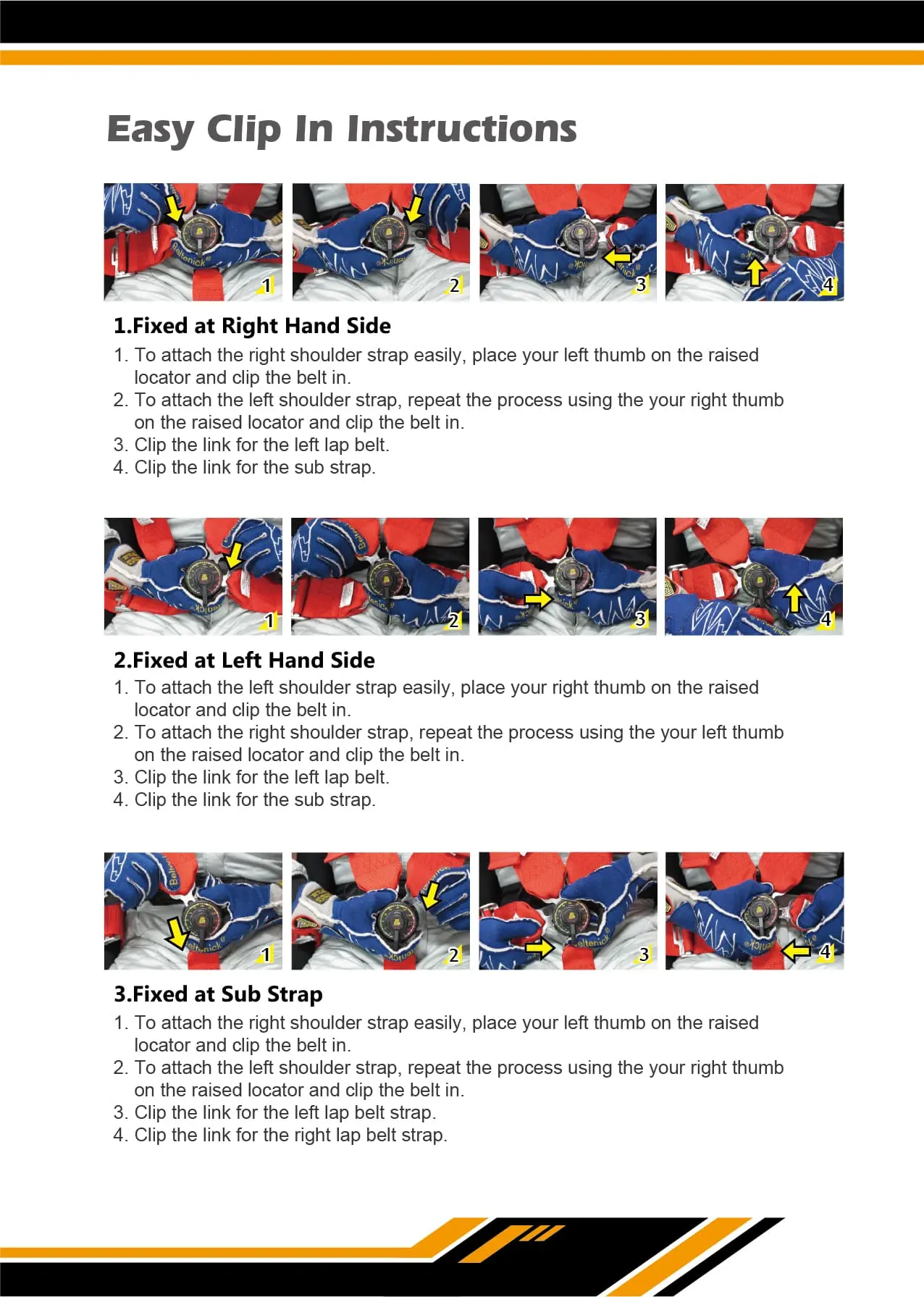
■ 固定端の選択肢は3種類
- 左側固定
- 右側固定
- サブストラップ側(股)固定
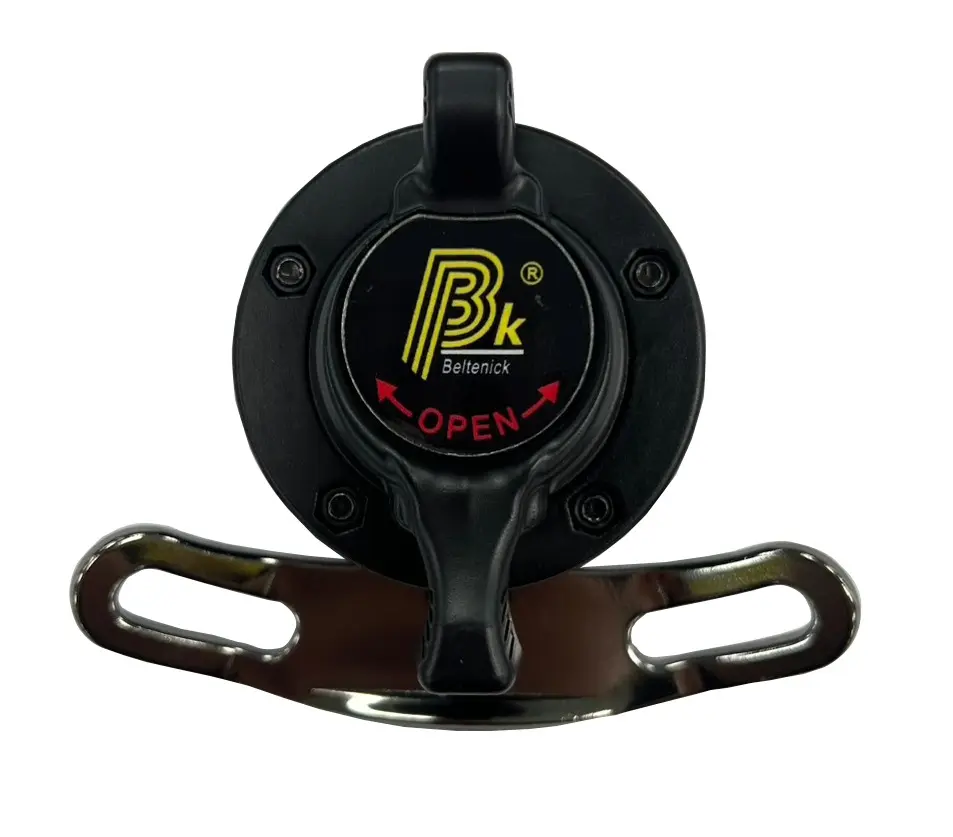
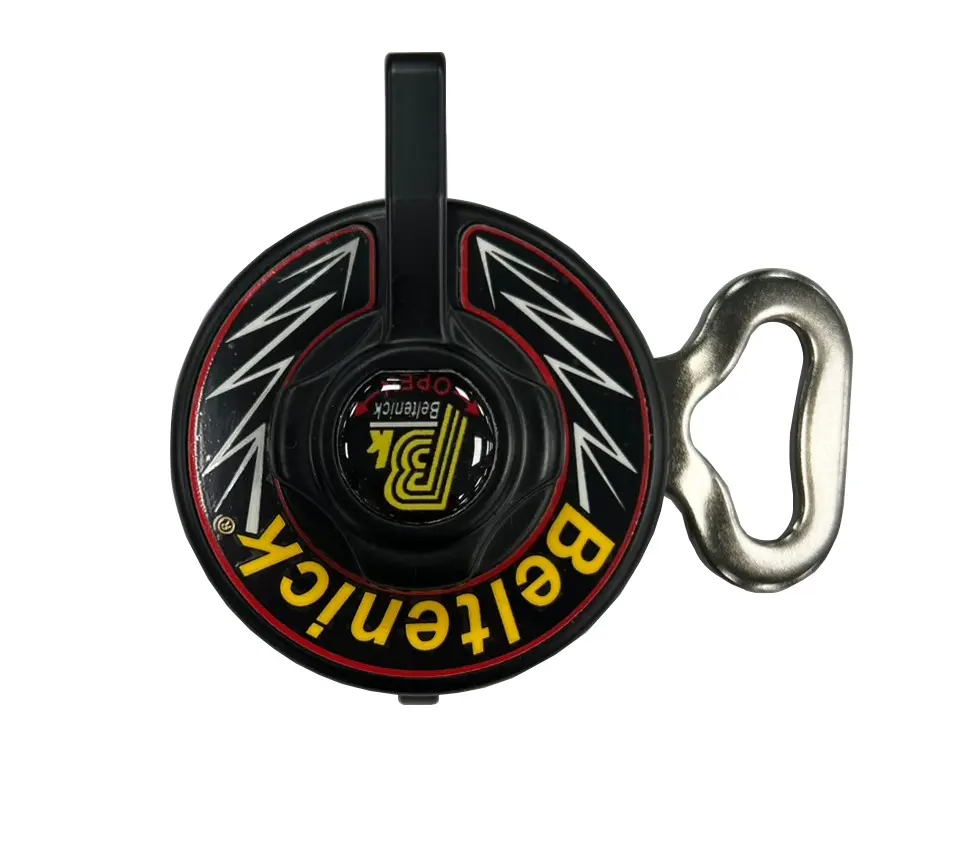
固定端の選択は、ドライバーの操作習慣や、緊急時における迅速かつ直感的な脱出性を考慮して決定されます。
正しく取り付けられている場合、どんな固定端でも安全性は同じですが、 固定端を選択する際に、以下のポイントが重要です。
1. Dominant Hand:
多くのドライバーは、緊急時により自然かつ迅速にハーネスを解除できるよう、利き手に合わせて固定端の方向を選択します。
例えば:
右利きの場合:左側固定タイプを選択
左利きの場合:右側固定タイプを選択
2. コックピットレイアウト:
バックルの位置は、シフトレバーやサイドブレーキ、その他の操作系に干渉しないように配置してください。
3. 脱出方向(エスケープルート):
想定される主な脱出方向を考慮してください。 一部のレース規則や車両仕様によっては、より迅速な脱出のために特定の方向が推奨される場合があります。
4. 技術規則:
バックルの配置方向については、FIAなど各カテゴリーの規則に基づき、事前に確認することが重要です。
あなたに最適なレーシングハーネスをお探しですか?
Beltenick FIA & SFI公認レーシングハーネスの違いや選び方について、
下記の記事をご覧ください。
■ Beltenick – SFI Racing Harness with Buckle
RCU-101, RCU-102, RCU-104, RCU-107A


上記のハーネスの固定端は左側・右側・サブストラップ側から選択できます。
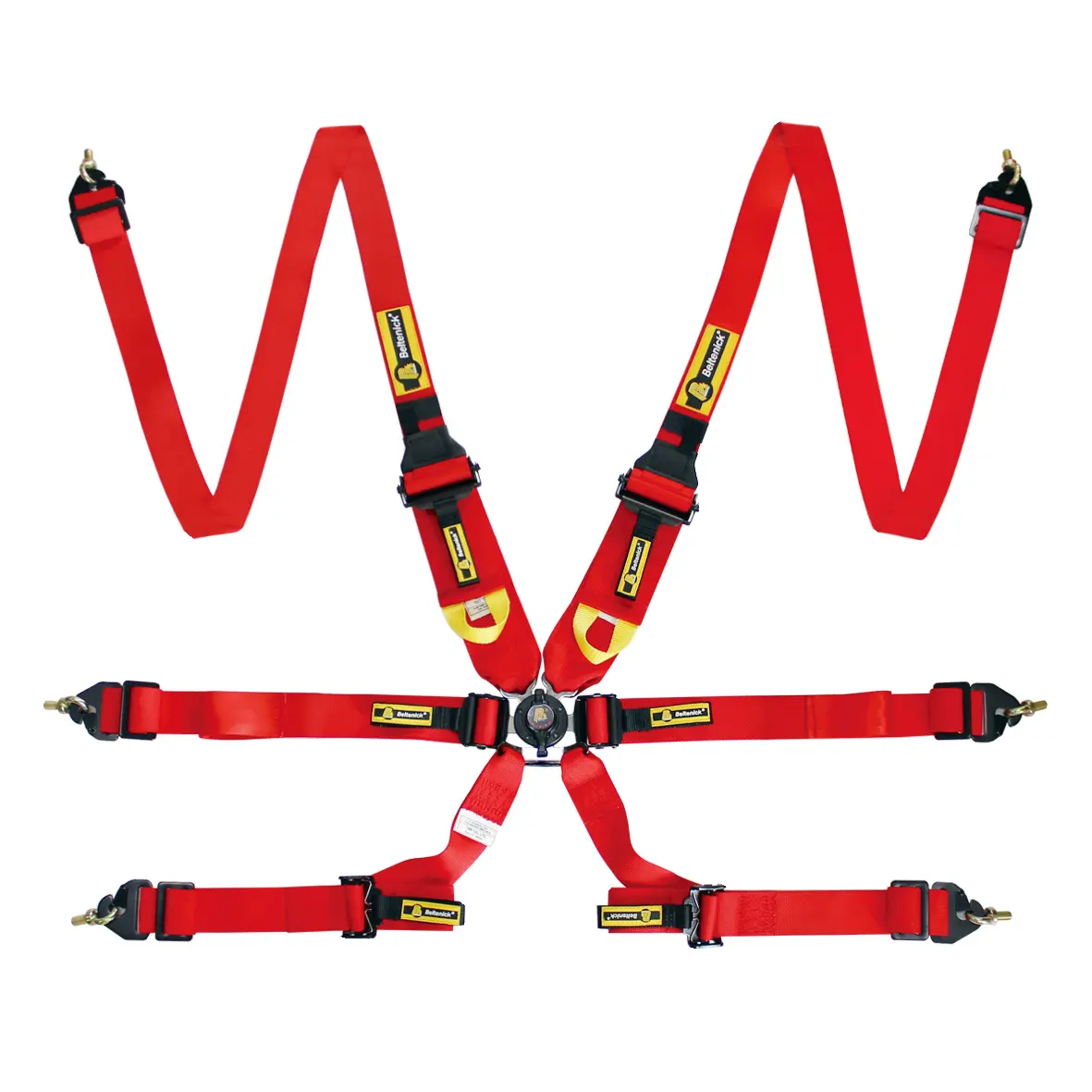
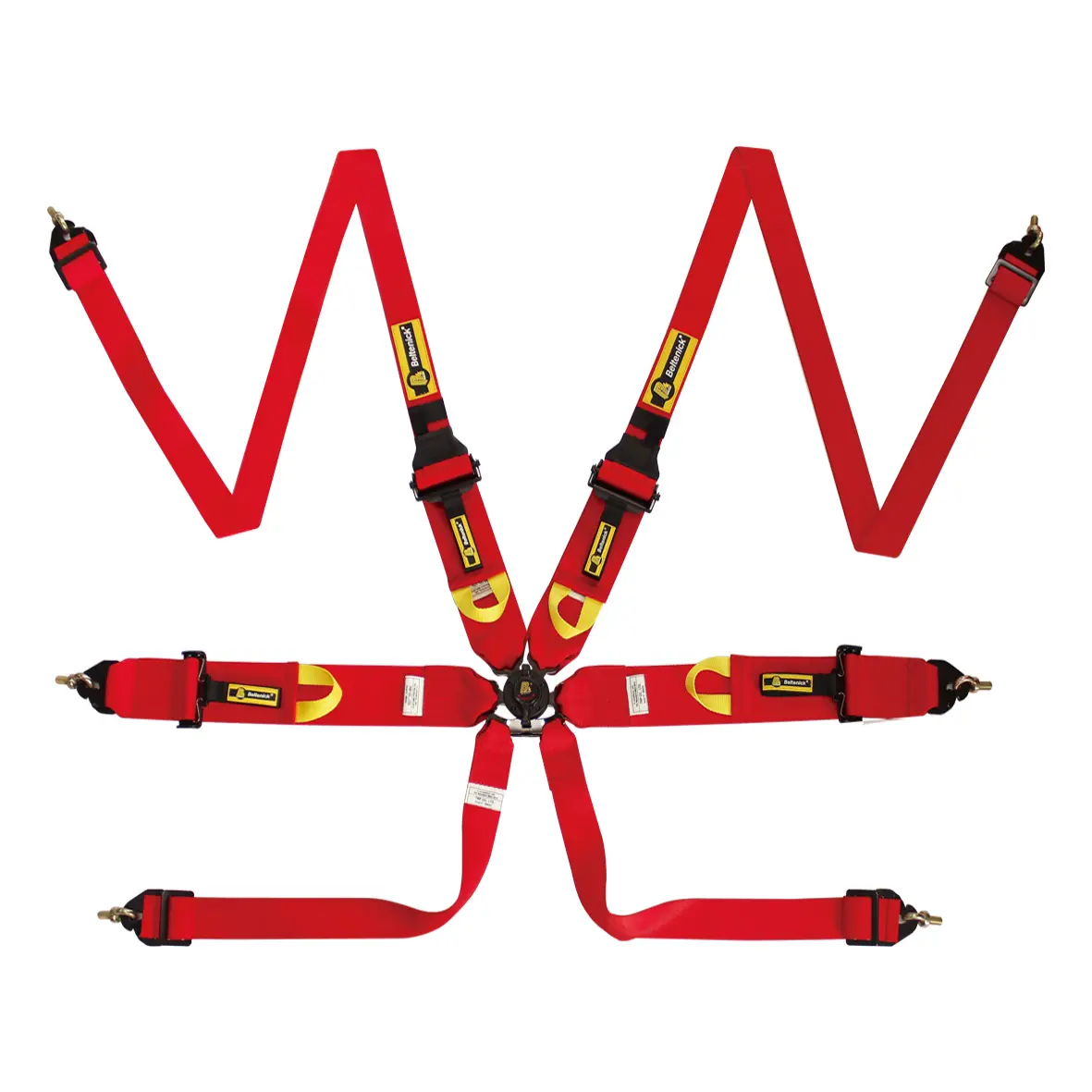
■ Beltenick – FIA Racing Harness
FIA 8854/98 Approved Racing Harness
RCU-1100A:固定端は左側または右側から選択可能(片側固定)
FIA 8853-2016 Approved Racing Harness
RCU-1002H:サブストラップ側固定
RCU-1004W:右側固定
RCU-1005:サブストラップ側固定
RCU-1006:右側固定




■ レーシングハーネスの正しい装着方法
固定端の位置に関わらず、安全性は以下の3つのポイントに大きく左右されます。
Snug Fit:
ラップベルト(股ベルト)は骨盤および大腿上部にしっかりと密着させ、 ショルダーストラップは肩と胸の中心を通るように装着してください。
ねじれのない状態で装着:
Ensure all webbing is flat. Twisted straps significantly reduce the harness’s effectiveness during an impact.
スムーズな作動性:
バックルは確実かつ迅速にロックおよび解除できることが重要です。
当社のレーシングハーネスは、高負荷環境下でも安定した操作が可能なクイックリリース機構を採用しています。
See the article below to find Beltenick FIA & SFI Racing Harness Selection Guide:
SFI&FIA公認レーシングハーネスの製品一覧はこちら